Understanding the Differences Between Sustainability, Sustainable Development, and Sustainable Growth
🌻
Introduction
In today’s world, terms such as sustainability, sustainable development, and sustainable growth are widely used in discussions about the future of the planet and the role of businesses and governments in building a fair and resilient society. Although they are often used interchangeably, each concept has specific meanings and nuances. Understanding these differences is essential in order to apply them correctly across environmental, social, economic, and organizational contexts.
1. Sustainability
Sustainability refers to the ability to meet present needs without compromising the ability of future generations to meet their own. The concept emerged mainly from environmental and economic thinking and emphasizes responsible resource use, environmental protection, and intergenerational equity.
In practice, sustainability involves decision-making that minimizes environmental impact while supporting long-term economic and social well-being. It focuses on maintaining balance over time and ensuring that natural systems remain viable for the future.
2. Sustainability as a Holistic Approach (Latin American perspective)
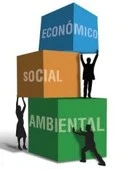
In many Latin American contexts, the term sustainability (often translated from sustentabilidad) expands beyond environmental and economic dimensions to explicitly include social and cultural aspects. This broader interpretation emphasizes maintaining a dynamic and stable balance over time, where natural systems, human development, social equity, and cultural diversity coexist harmoniously.
In business and organizational settings, this approach to sustainability implies operating responsibly today while actively promoting inclusion, social justice, and respect for local cultures, without undermining future generations’ opportunities.
3. Sustainable Development
Sustainable development gained global recognition with the publication of the Brundtland Report (Our Common Future, 1987), which defined it as:
“Development that meets the needs of the present without compromising the ability of future generations to meet their own needs.”
This concept integrates economic growth with environmental protection and social equity. Sustainable development promotes progress that is compatible with ecological limits and human well-being. Examples include renewable energy policies, biodiversity conservation initiatives, inclusive economic strategies, and responsible infrastructure development.
4. Sustainable Growth
Sustainable growth focuses specifically on economic expansion that can be maintained over time without exhausting natural resources or generating irreversible environmental or social damage. Unlike sustainable development, which balances multiple dimensions, sustainable growth places greater emphasis on long-term economic viability supported by efficiency, innovation, and responsible resource management.
In this sense, sustainable growth is often used in economic and business contexts to describe growth strategies that remain stable, resilient, and environmentally responsible over time.
Conclusions 🌱
Understanding the differences between sustainability, sustainable development, and sustainable growth is essential for designing effective policies, corporate strategies, and long-term solutions. Each concept provides a distinct framework for action, guiding decision-making toward a future that balances environmental protection, social responsibility, and economic resilience. When used correctly, these concepts help organizations and governments move beyond rhetoric and toward meaningful, context-aware action.
